





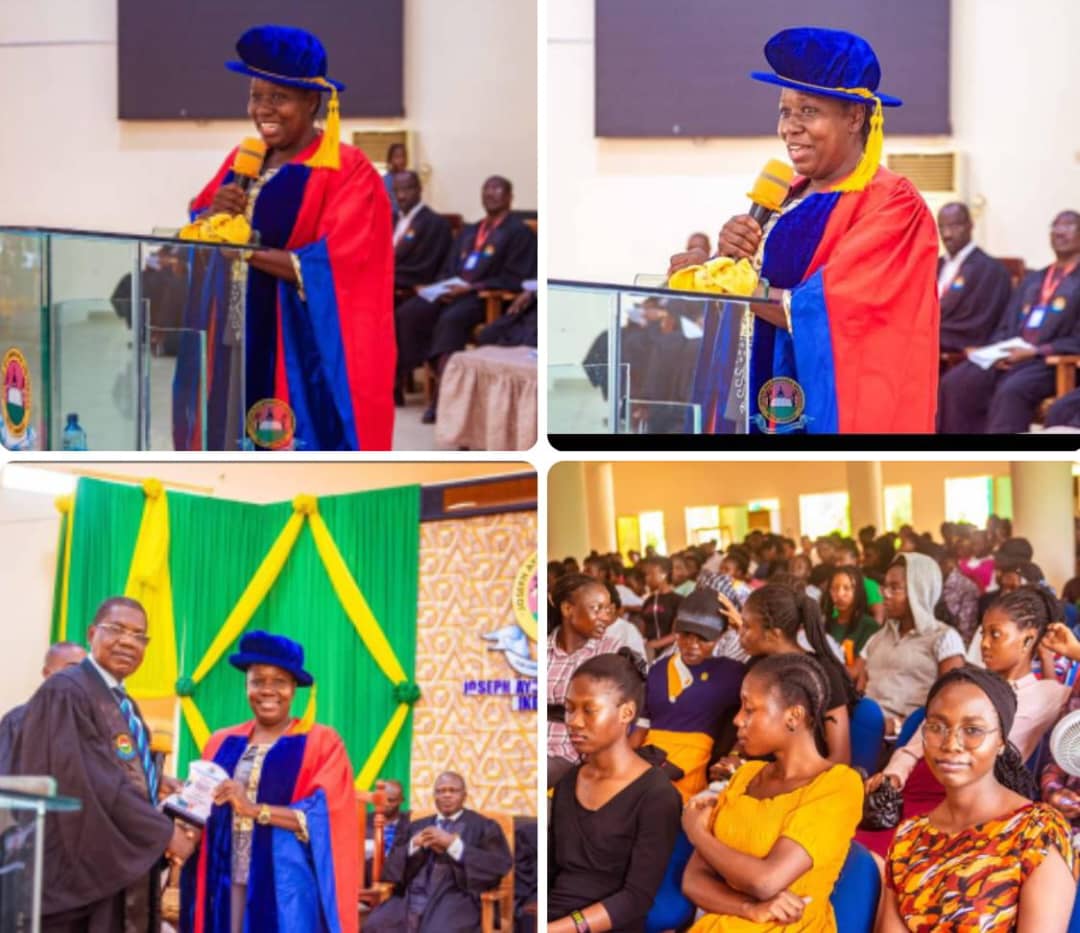
A Professor of Computer Science and Cyber Security, Adebukola Onashoga, has charged members of Generation Z to embrace adaptive learning, interdisciplinary collaboration and technology-driven problem-solving as essential tools for thriving in the modern digital age.
Prof. Onashoga made call on Thursday while delivering the 16th convocation lecture of Joseph Ayo Babalola University, Ikeji-Arakeji, Osun State.
In a lecture titled “Empowering the Gen Zs: Building Adaptive ICT Talents for the Future”, the guest lecturer described Gen Zs as individuals close to technology and digitally connected.
She also characterised them as fearless explorers driven by the desire to solve problems. She however noted that beyond their enthusiasm for digital tools, they must cultivate a growth mindset and build the capacity to use technology effectively for problem-solving.
The scholar, who is from the Federal University of Agriculture, Abeokuta, added that Gen Zs “must understand the underlying principles behind the ICT tools they are using” in order to apply them meaningfully.
Professor Onashoga emphasised that the future workplace is increasingly interdisciplinary and therefore encouraged young people to “see yourself as bridge builders, able to collaborate and work with people of diverse backgrounds.” She also urged them to embarace creativity and innovation through digital delivery mechanisms, adding that students must collaborate and communicate with people in other fields to broaden their competence and perspective.
Prof. Onashoga who outlined what she called the “formula for success,” identified tools, skills and innovation as the central pillars upon which young people must build.
You need the tech skills to succeed in this technology age,” she said, noting that problem-solving and critical thinking remain essential. She explained that Gen Zs “must look for problems to solve in order to stay relevant in their fields” and apply their critical thinking skills to address real-life challenges.
The convocation Lecturer also encouraged students to be adaptive and embrace continuous learning through digital literacy, adding that they must be intentional with their online presence. She however cautioned them to be careful how they present themselves online, stressing that online behaviour has real-world consequences, especially on professional identity.
According to her, developing a sense of belonging within one’s discipline is essential for understanding expectations and effectively leveraging technology. She clarified that ICT “is not a replacement but a force multiplier that enhances productivity by providing the speed and efficiency required in modern workspaces.
The convocation lecturer further advised students to begin building their skill sets immediately, dedicating substantial hours to online training and knowledge acquisition. She also encouraged them to use their phones productively, saying they should “gain knowledge rather than chat and engage in unproductive activities online.”
She urged them to take advantage of digital learning platforms and immediately put gained skills into practice for solving problems.
She also stressed the need for them to use digital tools for creation, not just for consumption, approach challenges as a builder with the world’s toolkit, learn one new tech skill, start at least one hands-on project and embrace collaboration.
Earlier, the Vice Chancellor of the institution, Professor Olasebikan Fakolujo, said the topic was carefully chosen to inspire younger generations to embrace leadership and develop the vital skills required to fit into the realities of contemporary technology-driven society.
He urged students to adopt the insights shared during the lecture “for their use and for the overall benefit of the society,” noting that the modern world demands deliberate effort, technological relevance and skill-based competence.