


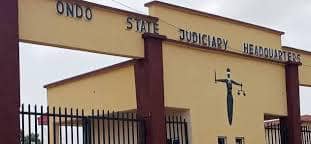
The Ondo State judiciary has been plunged into a deep constitutional and institutional crisis following an indefinite strike by a coalition of magistrates, presidents of Grade A customary courts, legal research officers and the Judiciary Staff Union of Nigeria JUSUN.
Court activities across the state’s 18 local government areas remain suspended, raising serious concerns about access to justice, public safety and governance.
The strike, which has entered a critical phase in January 2026, is rooted in allegations that the executive arm of government has failed to respect the constitutional financial autonomy of the judiciary. Judicial officers accuse the state government of deliberately starving the courts of funds, thereby crippling their operations and welfare.
The Social Democratic Party (SDP) in Ondo State expressed deep concern over the ongoing judicial strike in the state, describing the situation as a constitutional crisis caused by the failure of the state government to grant financial autonomy to the judiciary.
According to findings, the Ondo State judiciary budget was reduced from about 17 billion naira in 2025 to 9.5 billion naira in the 2026 fiscal year. Compounding the situation, Governor Lucky Aiyedatiwa is said to have approved only partial autonomy, limited to recurrent expenditure.
Judicial sources warn that this decision could result in a 20 percent cut in staff salaries in 2026, while capital expenditure for infrastructure and equipment remains unfunded.
The impact has been severe. Courts across the state have been shut, leaving suspects stranded in police cells and correctional facilities without arraignment or bail. Victims of domestic abuse and sexual and gender based violence have also been left without access to protection orders or timely justice.
Legal practitioners insisted that the shutdown has paralysed commercial and civil activities, including land disputes, probate matters, debt recovery and contractual enforcement. Many lawyers who depend on active litigation for their livelihood have been forced into sudden financial hardship.
Beyond funding, welfare conditions for judicial officers have become a flashpoint. Magistrates and Grade A customary court presidents reportedly commute to work on commercial motorcycles and public transport due to the non-release of funds approved for official vehicles.
Although the governor approved about 400 million naira for the purchase of vehicles as far back as 2024, the money has allegedly not been released by the Commissioner for Finance.
High Court judges are also affected, with official vehicles said to be over six years old and increasingly unreliable. Repeated appeals for replacement since 2024 have reportedly been ignored. Even judges’ annual vacation allowance for 2025 was paid only in the final week of the vacation period.
Court infrastructure is another area of concern. Several court buildings are described as dilapidated, with proceedings frequently suspended whenever it rains due to flooding inside courtrooms.
In a collective letter dated 7 January 2026 and addressed to the governor through the Chief Judge, the coalition of magistrates, customary court presidents and legal research officers outlined a comprehensive list of demands. These include full implementation of judicial financial autonomy, improved salary structures separate from the civil service, provision of official vehicles, enhanced operational funding, upgraded court infrastructure, and better welfare and training opportunities.
While the coalition described the letter as a good faith effort rather than an ultimatum, it warned that the absence of concrete action had made a restatement of demands inevitable.
Amid the crisis, questions are increasingly being asked about the balance of power within the state government. Judicial sources allege that several approvals granted by Governor Aiyedatiwa have been stalled or reversed by the Commissioner for Finance, including the long delayed vehicle procurement for magistrates.
This has fuelled public debate over who truly holds authority in Ondo State, with critics questioning whether the governor has effective control over his own cabinet.
Observers warn that a prolonged shutdown of the judiciary poses a grave threat to the rule of law. They argue that without functional courts, Ondo State risks sliding into legal uncertainty where rights cannot be enforced and grievances cannot be resolved.
The Social Democratic Party (SDP) in Ondo State through the state Chairman, Gbenga Akinbuli, described the situation as a constitutional crisis caused by the failure of the state government to grant financial autonomy to the judiciary.
Akinbuli, said the shutdown of courts across the state was the direct outcome of what he described as the government’s persistent disregard for constitutional provisions.
He stated that the issue had gone beyond an industrial dispute, warning that the continued paralysis of the judiciary posed a serious threat to democratic governance and the rule of law.
According to Akinbuli, the prolonged strike has imposed severe hardship on citizens, particularly those awaiting trial. He noted that many individuals remain in police custody due to the non-functioning of the courts, while commercial activities and access to justice have been significantly disrupted.
As pressure mounts, civil society groups and legal stakeholders are calling on the Ondo State Government to urgently resolve the impasse, restore full judicial autonomy and prevent further erosion of public trust in the justice system.