


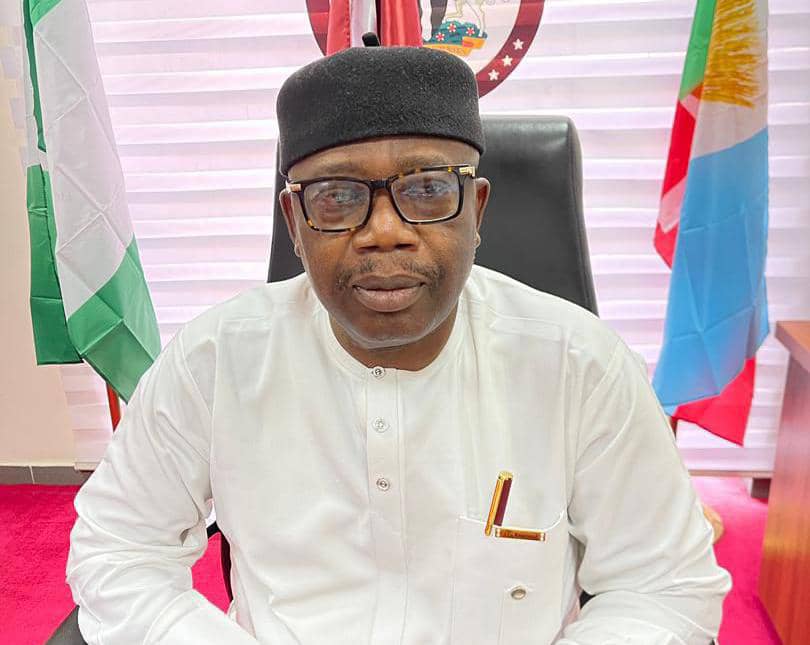
Stop Looking for Another Savior: Ondo North Already Has a Working Senator
Beyond Metaphors: A Respectful Note to Sola Ajisafe, Esq, on Senator Olajide Ipinsagba and the Burden of Fair Judgement.
Sola Ajisafe, Esq, remains one of the notable voices from Ondo North, an intellectual whose interventions, whether applauded or contested, often compel society to pause and reflect. In that spirit, your recent essay on Senator Olajide Ipinsagba deserves a response, not in the language of insult, not in the tone of quarrel, but in the mature tradition of civic engagement where disagreement does not dissolve respect, and correction does not require contempt.
If one reads your piece carefully, it becomes clear that your critique was not directed at Senator Ipinsagba alone. You questioned the entire political machinery that has produced senators for Ondo North since 1999. You interrogated the electorate, the political class, and the systemic limitations that have shaped representation in our district. That broader reflection is not entirely without substance. Indeed, Ondo North has, at different moments, wrestled with the painful question of whether its best always finds its way to the national stage. On that score, you spoke to a collective anxiety, not merely a personal grievance.
However, it is precisely because your voice carries weight that one must gently caution against the danger of metaphors that unintentionally diminish dignity, and conclusions that risk hardening cynicism into permanent judgement. In diagnosing the flaws of the system, we must be careful not to belittle the intelligence of communities, the legitimacy of democratic choices, or the ongoing efforts of those currently entrusted with responsibility.
With utmost respect, describing a sitting Senator of the Federal Republic of Nigeria, an accomplished businessman, public figure, and elected representative, as an “Amukun” is a metaphor that requires reconsideration. Not because criticism is forbidden, but because disability metaphors in political discourse often drift from analysis into belittlement. Ondo North is filled with citizens living with physical challenges who contribute meaningfully to society; disability is not incompetence, and incompetence should not be framed as disability. A man may be criticised, yes, but metaphors must still preserve civic decency. Such language, if left uncorrected, does not merely wound the individual; it also injures the moral texture of our public conversation.
You also compared Senator Ipinsagba with senators from other districts, suggesting that Ondo North entered the Senate arena with weaker hands. But democracy demands that performance be judged with fairness and context. A senator who has not completed a full tenure should not be dismissed as though his story has ended on chapter one. Representation is not a 100-metre dash where a verdict is pronounced at the first bend; it is a mandate measured in seasons, in institutional footprints, and in tangible outcomes that accumulate over time.
And on the matter of outcomes, the record is clearer than metaphor.
In less than two years, Senator Olajide Ipinsagba has demonstrated a pattern of legislative seriousness and constituency engagement that Ondo North cannot afford to ignore. He sponsored and secured the passage of a bill for the establishment of an ICT University in Ikare Akoko. That is not tokenism. Universities are institutional legacies. They outlive political cycles and become generational assets. If Ondo North has long complained about underdevelopment, then a senator bringing an ICT university to the district is not an object of pity; it is a representative attempting structural intervention.
Beyond that, over one thousand tertiary students have benefitted from scholarships and bursaries, alongside yearly JAMB sponsorship for another thousand candidates. It is easy for commentators to dismiss such interventions as small, until one remembers that education remains the most powerful ladder out of poverty for the average Ondo North family. These are not abstract gestures; they are lifelines to households whose children would otherwise be denied opportunity.
In the realm of health, free eye medical outreach and surgeries across the local governments, Phase One and Phase Two, are not mere photo opportunities. They are life-changing interventions for citizens who cannot afford specialised care. Restoring sight is not a trivial act in a society where the poor often suffer silently. It is governance at its most humane level.
Infrastructure and community development also bear witness. Completed civic centres in Ikare and Okeagbe, ongoing town halls, classroom renovations, boreholes, electrification projects, transformers, and solar installations across towns reflect presence, not absence. Ondo North is not only one village. It is a senatorial district of diverse needs, and these projects reflect broad coverage, not parochial neglect.
Empowerment initiatives, too, have not been narrow or episodic. From farmers’ training in multiple phases, to digital marketing empowerment with laptops and grants, to tailoring, catering, and SME support, the senator has invested in livelihood structures, not merely in slogans. These are the kinds of interventions that speak directly to the economic anxieties of youth and women, those who live at the sharp edge of Nigeria’s hardship.
What makes your essay particularly striking is that you yourself acknowledged the political circumstances that produced Senator Ipinsagba: zoning dynamics, emotional currents, intra-party calculations, and Akoko solidarity. But respectfully, that is precisely the point. Politics is always contextual. No senator emerges from a vacuum. Every election is shaped by history, bargaining, equity, and regional balance.
To now reduce that same process to pity after participating intellectually in the debates of that season risks unfair revisionism. Senator Ipinsagba did not appoint himself. He emerged through the very democratic currents that you have analysed and engaged.
You argued that Ondo North has been unlucky since 1999. Perhaps. But if the conclusion becomes that everyone is the same and nothing matters, then we institutionalise hopelessness. And hopelessness is the most expensive luxury a district can afford. The responsible intellectual task is not only to criticise the process, but also to recognise progress when it appears, even if imperfectly. Otherwise, cynicism becomes a self-fulfilling prophecy.
It is also worth saying, gently, that those already warming up for the next election should exercise patience. Ambition is normal, but Ondo North must not be dragged into premature succession politics when a sitting senator is still mid-stride. Governance is not a relay race run in impatience; it is a mandate measured in continuity. Those who want to contest should prepare, yes, but they should also allow the present occupant of the office to complete the work the people elected him to do.
Mr Ajisafe, you are entitled to your opinion, and your voice matters. But Ondo North also deserves fairness. Senator Ipinsagba may not be perfect, no senator is, but to frame him as inherently unfit is inconsistent with the evidence of his interventions so far. The more constructive approach is to critique where necessary, encourage where deserved, and allow governance to mature beyond premature dismissal.
Ondo North has spent too long looking backward in disappointment. It is time we also look forward with discernment, with balance, and with the humility to admit that even within an imperfect system, measurable strides can still be made.
And so, perhaps the fairest position is this: Ondo North must learn to separate legitimate critique from self-inflicted disparagement. A district does not heal by constantly speaking of itself in the language of deficiency, nor does it advance by ridiculing every step of progress as though nothing good can ever emerge from its soil. Senator Olajide Ipinsagba, within a short span, has shown tangible footprints, legislative initiative, educational support, health interventions, infrastructural presence, and a constituency consciousness that cannot honestly be dismissed as mere accident.
He may not satisfy every lofty expectation of intellectual theatre, but governance is not performed only in eloquence; it is measured in impact, in institutions built, in lives touched, and in the quiet restoration of hope where neglect once reigned.
Those who speak loudly must also look inward and ask whether their own assessments are shaped by proximity, nostalgia, or political impatience. Ondo North is larger than any single village, and its destiny cannot be held hostage to permanent cynicism or the restless ambitions of those already shopping for tomorrow. Let those who believe they can do better prepare themselves with humility and substance, but let them also recognise that the man presently holding the mandate is not an object of pity, but a senator working, growing, and leaving marks that history will not ignore.