



The Legality of the 2025 United States Airstrikes in Nigeria and the Imperative for Strengthening Regional Security Initiatives such as Amotekun
-Dr Olukayode Ajulo, OON, SAN
The United States’ airstrikes against Islamic State (ISIS)-affiliated militants in northwest Nigeria on December 25, 2025, represent a significant intervention in the ongoing fight against transnational terrorism in West Africa.
On December 25, 2025, United States forces, under the direction of President Donald Trump, launched precision airstrikes targeting ISIS-linked camps in Sokoto State, northwest Nigeria. The operation, involving Tomahawk missiles fired from a naval vessel in the Gulf of Guinea, neutralized multiple militants at two identified enclaves in the Bauni forest region of Tangaza.
U.S. Africa Command (AFRICOM) confirmed the strikes were executed in coordination with Nigerian authorities, based on shared intelligence indicating the sites were staging grounds for large-scale attacks.
Nigerian officials, including the Ministry of Information and Foreign Affairs, affirmed the operation’s joint nature and its alignment with ongoing bilateral security cooperation.
This intervention occurs amid escalating jihadist activity in Nigeria’s northwest, where groups such as the Islamic State Sahel Province (formerly known as Lakurawa) and Islamic State West Africa Province (ISWAP) have exploited governance vacuums. Simultaneously, regional initiatives like Amotekun—established in 2020 by southwest states—have demonstrated efficacy in community-level policing. Recent international acknowledgment of Amotekun’s contributions to peace and security further validates the role of decentralized mechanisms.
It is essential to carefully analyze the legal foundations of the U.S. actions and to advocate for increased federal support for subnational security entities, as they play a vital role in Nigeria’s security framework.
II. The Legality of the United States Airstrikes Under International Law
A. Host-State Consent as the Bedrock of Legality
The prohibition on the use of force enshrined in Article 2(4) of the UN Charter admits exceptions, foremost among them the consent of the territorial state. The 2025 strikes were conducted with Nigeria’s explicit approval, as evidenced by statements from AFRICOM, the Nigerian Ministry of Defence, and Foreign Minister Yusuf Maitama Tuggar, who described the operation as a “joint” effort predicated on Nigerian-provided intelligence.
This consent vitiates any claim of violation of sovereignty, aligning with customary international law and precedents such as U.S.-led operations in Iraq and Syria against ISIS with host-state acquiescence.
B. Collective Self-Defense and UN Security Council Mandates
Even absent consent, the strikes could be justified under Article 51’s inherent right of self-defense, extended collectively where threats transcend borders. ISIS’s global network poses an ongoing menace, with UN Security Council Resolution 2249 (2015) urging member states to employ “all necessary measures” against the group.
The targeted militants’ affiliations with ISIS offshoots planning attacks—potentially implicating broader regional stability—satisfy criteria of necessity, proportionality, and immediacy under the Caroline doctrine. The precision nature of the strikes, resulting in no reported civilian casualties per initial assessments, complies with international humanitarian law obligations of distinction and proportionality.
C. Proportionality and Necessity in Execution
The deployment of guided munitions minimized collateral risks, consistent with U.S. obligations under Additional Protocol I to the Geneva Conventions (albeit non-ratified by the U.S., reflective of customary law). Nigeria’s involvement ensured alignment with local intelligence, enhancing legitimacy and efficacy.
In sum, the strikes exemplify lawful international cooperation against non-state actors, reinforcing norms of responsible sovereignty in counter-terrorism.
III. Nigeria’s Security Challenges and the Case for Decentralized Architecture
A. The Limitations of Centralized Security in a Federal State
Nigeria’s 1999 Constitution (as amended) vests exclusive authority over police and armed forces in the federal government (Sections 214–216, Item 45 of the Exclusive Legislative List).
Yet, the Nigeria Police Force’s numerical inadequacy—approximately 370,000 personnel for a population exceeding 220 million—and logistical constraints have perpetuated insecurity. Northwest Nigeria’s banditry and jihadist incursions, coupled with northeast Boko Haram remnants, expose the inefficiencies of a monolithic approach in a geographically expansive federation.
B. Constitutional Permissibility of Subnational Security Outfits
Amotekun, operational since 2020 across Ekiti, Ogun, Ondo, Osun, and Oyo States, functions as a supplementary community policing network.
Nigerian courts have upheld analogous state initiatives; for instance, in Attorney-General of Lagos State v. Attorney-General of the Federation (2004), the Supreme Court affirmed states’ residual powers in public safety matters not exclusively federal.
Amotekun’s mandate—intelligence gathering, rapid response, and collaboration with federal agencies—complements rather than supplants national forces, akin to permitted vigilante integrations under the Police Act 2020.
Recent developments bolster this framework: Amotekun’s contributions to crime reduction, farmer protection, and highway security have earned affiliation with UN-affiliated bodies, with July 7 declared “World Amotekun Day” in recognition of its alignment with Sustainable Development Goals on peace and security. This external validation underscores Amotekun’s efficacy and potential as a replicable model.
C. The Imperative for Fortification and Integration
Fortifying Amotekun through funding, training, and limited armament—subject to rigorous oversight—would enhance multi-layered defense without fragmenting authority.
Comparative federalisms (e.g., U.S. state National Guards, India’s state police) illustrate that decentralized elements strengthen national resilience. Absent such support, regional disparities persist: southwest relative stability contrasts with northwest vulnerabilities, risking terrorist spillover.
Human rights safeguards are paramount; Amotekun’s operations must adhere to the African Charter on Human and Peoples’ Rights and domestic enforcement procedures, with federal mechanisms ensuring accountability.
IV. Synergies Between International Intervention and Domestic Reform
The U.S. strikes disrupt immediate threats, affording Nigeria breathing space to institutionalize reforms. Integrating fortified regional outfits like Amotekun into a national strategy—perhaps via constitutional amendments enabling state police—would reduce dependence on foreign interventions, fostering self-reliance while honoring federalism.
V. Conclusion
The 2025 U.S. airstrikes in Nigeria are firmly grounded in international law, exemplifying consensual counter-terrorism. Yet, enduring security demands structural evolution: federal empowerment of initiatives like Amotekun.
By embracing multi-layered architecture, Nigeria can mitigate asymmetric threats, uphold sovereignty, and align with global best practices.
Policymakers should prioritize legislative reforms and bilateral dialogues to realize this integrated vision, ensuring protection of lives and promotion of stability in Africa’s most populous nation.
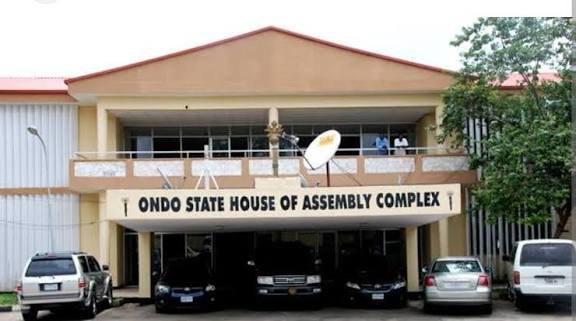
*Dr Ajulo is the Attorney General of Ondo State.